The pothole season and the council report card
Frost turns cracks into craters every winter. Report them well, claim with care, and read what your council now has to publish about its repairs.
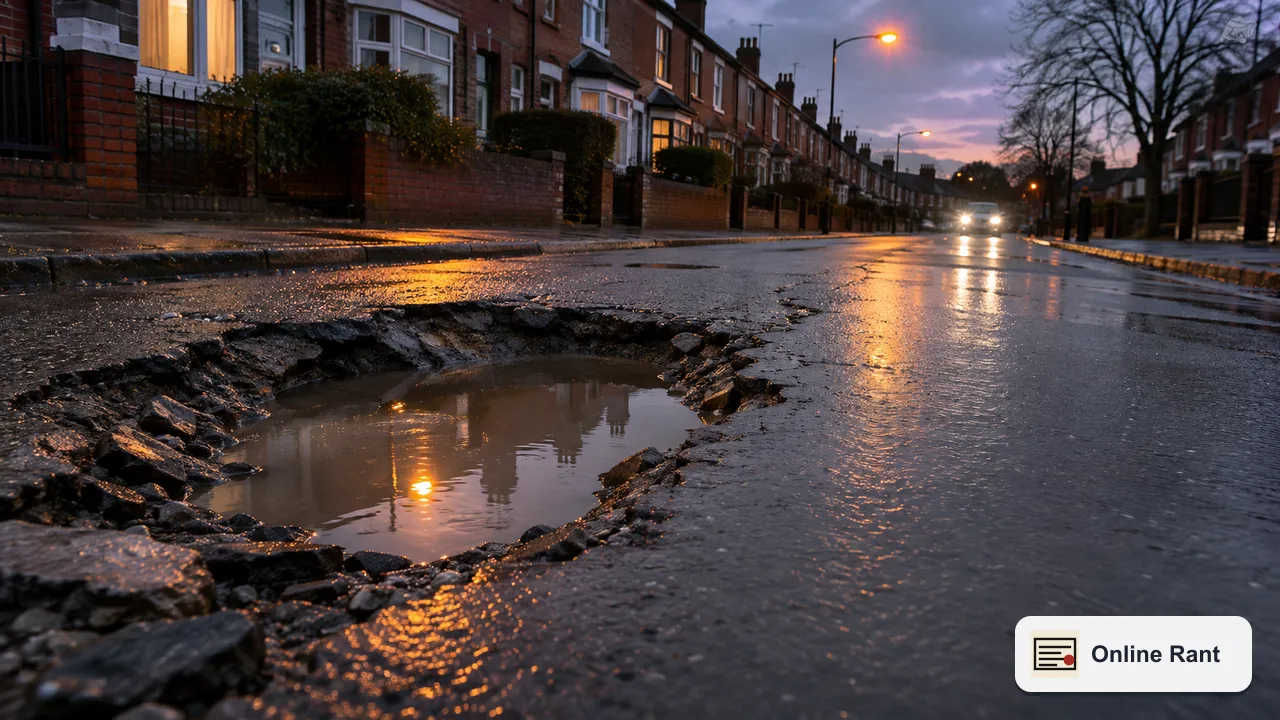
Winter is when Britain’s roads fall apart in earnest. Water gets into cracks, freezes, expands, thaws and leaves behind a hole that will meet your front tyre at 30mph on a dark evening. If it happens to you, there are two separate jobs: report the pothole so it gets fixed, and, if your car was damaged, decide whether a compensation claim is worth making. This year there is also a third thing worth a look, because councils in England now have to publish how well they are doing.
Step one: report it, properly
Every pothole belongs to someone. GOV.UK has a simple report a pothole page: in England and Wales you enter the postcode of the road and it sends you to the right council. Motorways and the major A roads managed by National Highways are reported to National Highways instead. Scotland and Northern Ireland have their own routes, linked from the same page.
A good report takes two minutes and matters more than you might think, for a reason that comes up later. Include:
- the exact location, with the nearest house number, lamp post or junction;
- which lane or side of the road, and roughly how far from the kerb;
- an estimate of size and depth, ideally with a photo that has something for scale next to it, taken only when it is safe to stop;
- the date and time you saw it.
Keep the confirmation email or reference number. If you report through a council’s online map, screenshot the pin.
Why the report matters for claims
Councils are not automatically liable for every pothole. Section 58 of the Highways Act 1980 gives a highway authority a special defence if it can prove it took the care that was reasonably required to keep the road safe. When deciding whether it did, a court looks at things such as the character of the road and its traffic, the standard of maintenance appropriate for it, and whether the authority knew, or ought reasonably to have known, that the defect was likely to cause danger.
That last point is where your report and everyone else’s comes in. A pothole that has been reported several times and left alone is a very different case from one that opened up overnight on a road inspected last week. Councils run inspection schedules for this reason, and a claim often turns on whether they kept to them.
The report you make today may be the evidence in someone’s claim next month.
Step two: thinking about compensation
The Department for Transport says pothole damage costs drivers an average of £500. If you have a bill of that size, a claim can be worth considering. A rough sequence:
- Make it safe and record it. Photograph the damage and, if safe, the pothole itself with something for scale. Note the time, the weather and the lighting.
- Get the repair quoted or invoiced. A garage invoice that describes the damage, such as a split tyre or a bent wheel, is far stronger than a guess.
- Find the right authority. Use the same GOV.UK postcode tool. Claiming against the wrong council wastes weeks.
- Ask for the records. You can ask the authority for its inspection history and previous reports for that stretch of road. Councils often have claim forms that explain what they need.
- Submit and keep copies. Expect a decision to take time. If it is refused and you think the refusal is wrong, ask for the reasons in writing.
Be realistic. Because of the section 58 defence, a refusal is common, especially where the council can show the road was inspected on schedule. If the sum is large or injuries are involved, take proper legal advice before going further, and check whether your motor insurance or breakdown cover includes legal expenses. Claims for injuries have their own route, linked from the GOV.UK pothole page.
The council report card
Here is the newer development. On 9 June 2026 the Department for Transport issued guidance requiring councils in England to report publicly on how well they repair roads and what they do to prevent the same holes coming back. The reports were due by September 2026. Councils that failed to follow the guidance or publish on time risked losing nearly a third of the year’s highways maintenance funding.
The same announcement said red, amber and green ratings for each council, first published earlier in 2026, would be updated using the new guidance. Green-rated councils are those following good practice such as long-term prevention and full resurfacing rather than repeated patching. Red-rated councils were promised extra support, including £300,000 of expert help. The government also pointed to £7.3 billion of long-term road funding available to councils.
Why this matters to you
For years the only way to judge your council’s roads was to drive on them. Now there is, at least in principle, a published report to compare against. If your council’s report says its approach is prevention and resurfacing and your road has been patched four times in two years, that is a fair question to put to a local councillor. It also gives the people writing to the council something firmer than “the roads are terrible”.
The patch that keeps coming back
Every driver knows the pattern: a hole appears, a crew fills it with a shovel of asphalt, the patch lifts after the next frost and the hole returns, slightly larger. The government’s own announcement promised to end “patch up” fixes, which is an admission of how common they have been. Proper repairs take longer and cost more per hole, and they last. Whether councils can afford to do them at scale is the question the new reports are supposed to answer in public.
Until then, the individual driver’s options are modest but real. Report holes promptly and precisely. Keep tyres at the right pressure, which helps them survive impacts. Slow down on roads you know are bad, especially after a freeze. Cyclists, who suffer most from potholes, should report them too; an edge-of-road hole that a car straddles can throw a bike.
A small irritation within the larger one
Some councils make reporting easy, with a map and a photo upload. Others want an account, a password and a postcode before you can say there is a hole in Station Road. It is the same problem as the car park that wants you to download an app: a public service designed as if your time costs nothing. And if you end up calling the council instead, the phone menu may well route you to a chatbot that suggests reporting it online. Persevere. A pothole nobody reports is a pothole nobody is responsible for knowing about.
Sources
◊