The parcel was delivered, apparently
Delivered, says the tracking page. Not here, says your doorstep. The shop owns the problem until the parcel is in your hands.
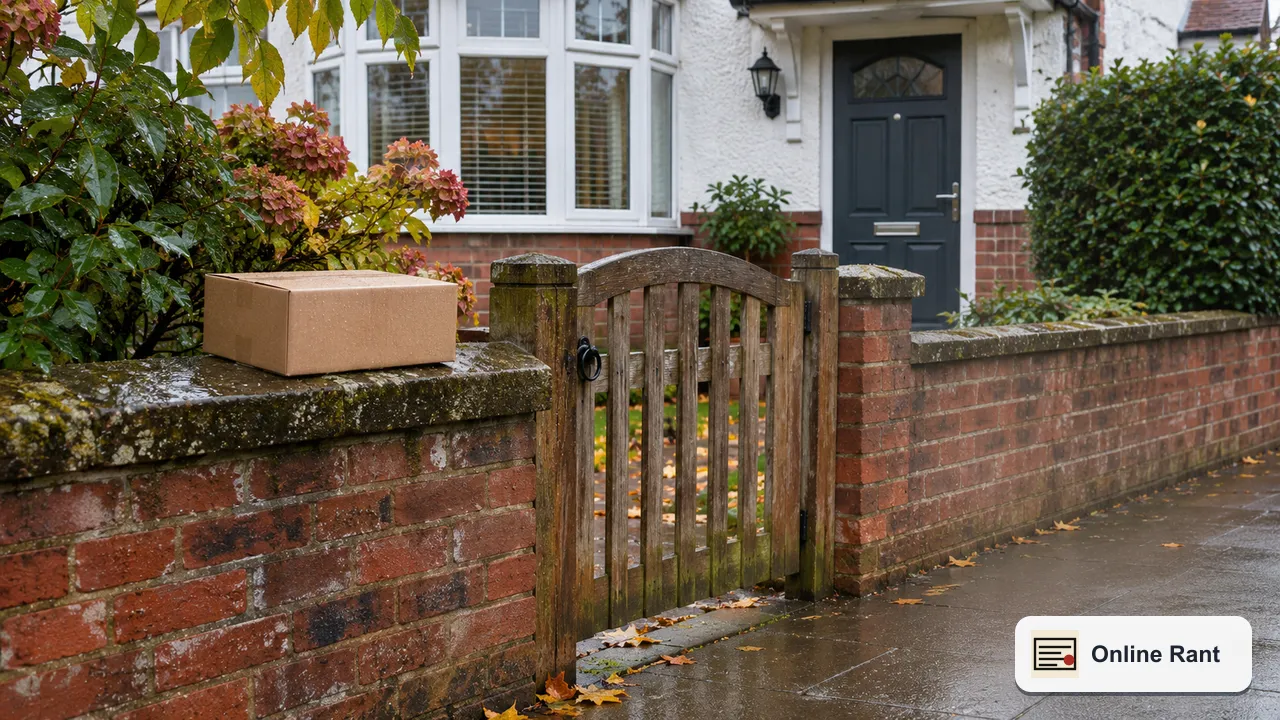
The tracking page says delivered. The photo shows a doorstep that is not yours, or a hedge, or the lid of a wheelie bin on collection day. You are not imagining the trend. Ofcom’s latest research on parcel firms, published on 27 October 2026, found that 71% of people receiving parcels had a problem with a delivery in the previous six months, up from 68% the year before. With the Christmas rush already under way, it helps to know two things: who is responsible when a parcel goes missing, and how to complain so that something happens.
What Ofcom found this year
According to reporting of the Ofcom findings, average customer satisfaction with parcel firms, which had held at about 78% from 2023 to 2025, fell to 75% in 2026. The most common problems were delays, reported by 32% of recipients, and parcels left somewhere inappropriate, reported by 28%. Evri and Yodel had the least satisfied customers for the fourth year running, with dissatisfaction of 42% and 33% respectively. Amazon and FedEx came top, each with 56% satisfaction.
Evri disputed the framing, pointing out that Ofcom’s figures are not weighted by the number of parcels each firm carries and citing its own delivery data. That is a fair point about method. It does not change the experience of the person standing on the doorstep. Ofcom said it is considering additional regulation if service does not improve, which, after several years of warnings, is the regulator’s way of clearing its throat a little louder.
Whose problem is a missing parcel?
If you bought something from a business and it was sent to you, the business that sold it is responsible until the goods reach you. This is set out in section 29 of the Consumer Rights Act 2015, which says goods remain at the trader’s risk until they come into the physical possession of the consumer or someone the consumer has named to receive them. The courier is the shop’s contractor, not yours.
In practice this means your complaint goes to the retailer, not the delivery firm. You do not have to chase the courier, wait for its investigation, or argue with a depot. The retailer can sort out its own dispute with its own contractor once it has sent you a replacement or a refund.
The exceptions worth knowing
- You chose the courier yourself. If you arranged and paid for a carrier the retailer did not offer, the risk passes to you when the goods are handed to that carrier. This mostly matters for second-hand purchases and bulky items collected by a firm you booked.
- You named a safe place or a neighbour. If you asked for the parcel to go behind the bins or to number 14, a delivery there may count as delivery to you. Think twice before ticking that safe place box in December.
- You are the sender. When you post something yourself, your contract is with the delivery firm, and its terms and any compensation limits apply. Insurance or enhanced cover is worth considering for anything valuable.
The courier is the shop’s contractor, not yours. Complain to the shop.
A complaint that gets read
The difference between a complaint that works and one that vanishes is usually evidence and a clear request. Before you contact the retailer, gather:
- A screenshot of the tracking page showing “delivered”, with the time.
- The delivery photo, if there is one, and a photo of your own front door for comparison if the photo is clearly somewhere else.
- Confirmation that you checked with neighbours and any safe place you nominated.
- The order number and the date you were told to expect delivery.
Then write, using the retailer’s contact form or email rather than a chat window, so you have a record. Say the item has not arrived, that under the Consumer Rights Act it remains the retailer’s responsibility until you receive it, and that you would like a replacement or a refund. Give a reasonable date for a reply. Use the word complaint. As with the chat widget that is there to slow you down, the bot will offer to “raise a ticket with the carrier”, which is the start of a long wait. You do not need to accept that as the only route.
If the retailer will not help and you paid by card, your card provider may be able to help through chargeback. For a single item costing more than £100 and up to £30,000 paid for by credit card, section 75 of the Consumer Credit Act can also apply. If you are unsure which applies, the Citizens Advice consumer helpline is free and will tell you. For larger sums or a disputed contract, take proper advice.
Late, not lost
A parcel that is simply late is a different situation. If you agreed a delivery date with the retailer, or told them delivery by a certain date was essential, such as before Christmas, and they missed it, you may be able to cancel and get a refund. If no date was agreed, section 28 of the same Act expects delivery without undue delay and within 30 days of the contract. Christmas is the classic case where it is worth saying, in writing at the time of ordering, that delivery by a specific date is essential.
Small habits for the busy weeks
- Choose click and collect for anything you cannot replace in time. A locker or a shop counter beats a doorstep for presents.
- Turn on delivery notifications. A text with a one-hour window lets you be in, or ask a neighbour to look out, instead of hoping.
- Inspect on arrival. Open boxes promptly and photograph any damage straight away. A broken item reported on the day is a far easier conversation than one reported in January.
- Be careful with delivery texts. Fake “missed delivery” messages spike in December. Check tracking through the retailer’s own website or app, not a link in an unexpected text.
Where this goes next
Ofcom already sets rules for how parcel firms handle complaints. The October figures suggest the rules have not changed much on the doorstep. Whether stronger regulation follows will depend on what Ofcom decides in the coming months.
In the meantime, the most powerful tool is the one you already have: the law says the shop owns the problem until the parcel is in your hands. Use it calmly and in writing, and keep the receipts, ideally the email version rather than a metre of thermal paper.
Sources
◊